
A coast that faces Madura
Situbondo is the regency that fills the north-eastern shoulder of Java, between Probolinggo to the west and Banyuwangi to the south-east. Its coast faces the Madura Strait, a sheltered sea far calmer than the open ocean on Java's south side. Much of the coast is dry, low and fringed with fishing villages, while the hills inland rise toward the Ijen massif and the inland town of Bondowoso.
The regency also contains Baluran National Park, whose savanna and forest cover the far north-east corner, so many visitors cross Situbondo without realising it. The coast between Baluran and Probolinggo has a character of its own, and it rewards a slower pace.
The road along the strait
The main north coast road links Probolinggo with Banyuwangi through Situbondo, and for much of its length it runs close to the shore. Heading out from Banyuwangi, it passes Ketapang harbour, threads through the forest edge of Baluran, then crosses the dry farmland of Asembagus before reaching Situbondo town and turning west toward Panarukan, Besuki and Pasir Putih.
Panarukan has a long history as a port. It is often named as the eastern end of the Great Post Road, built across Java under Dutch colonial rule in the early nineteenth century with forced labour, at great human cost. Little of that era is obvious today, but it explains why the road keeps so close to the coast.
The road is busy with trucks and buses heading to and from the ferry to Bali, so allow more time than the distance suggests. It is also the natural route between Bromo and the sea of sand and the Ijen side of the province.
Fishing villages and painted boats
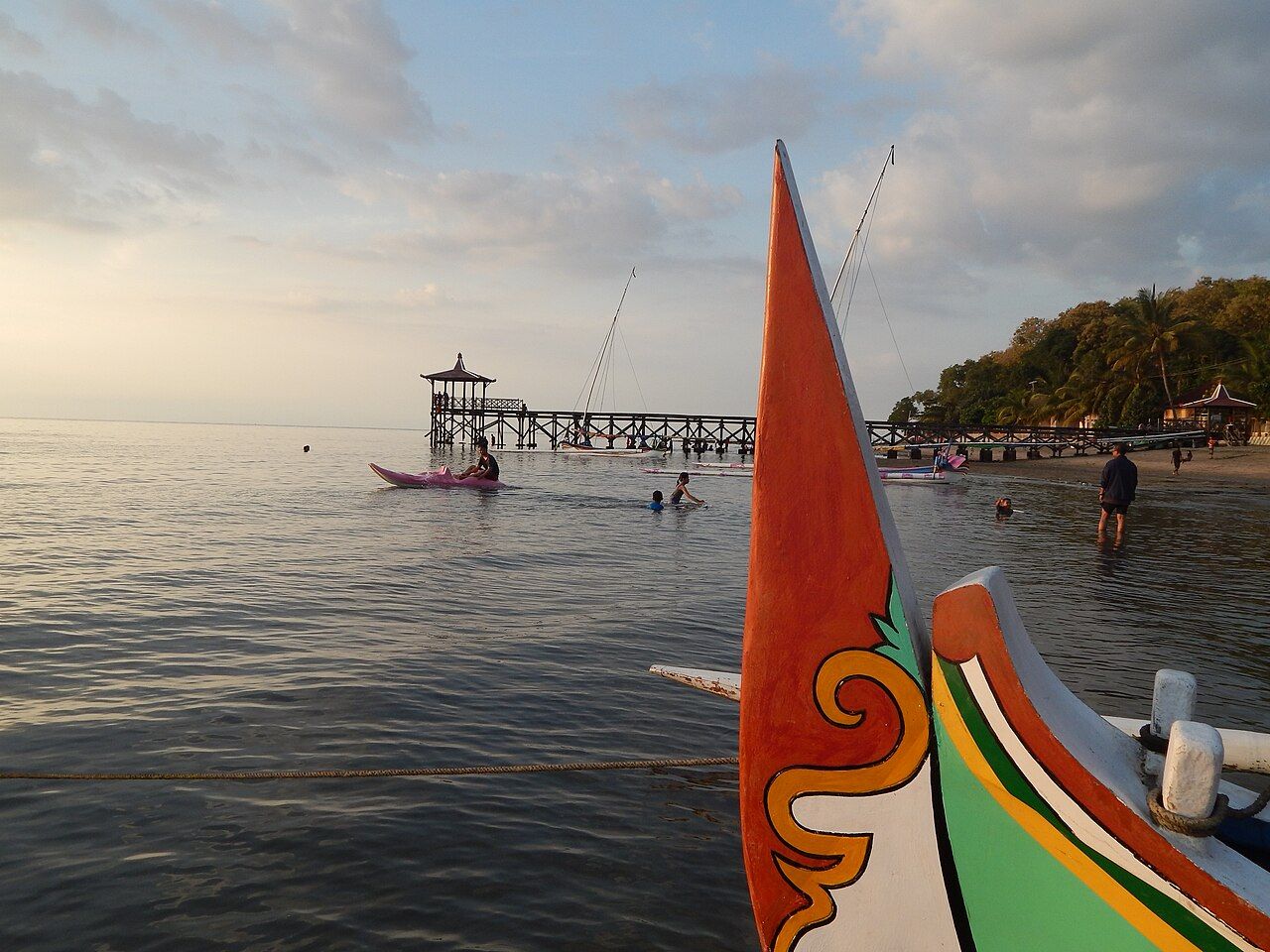
Many people along this coast are of Madurese descent, and Madurese is widely spoken alongside Javanese and Indonesian. Fishing is a mainstay, and the boats are a sight in themselves: long wooden hulls with outriggers, high, carved prows and bright paint in red, green, yellow and blue, often with patterns that vary from village to village.
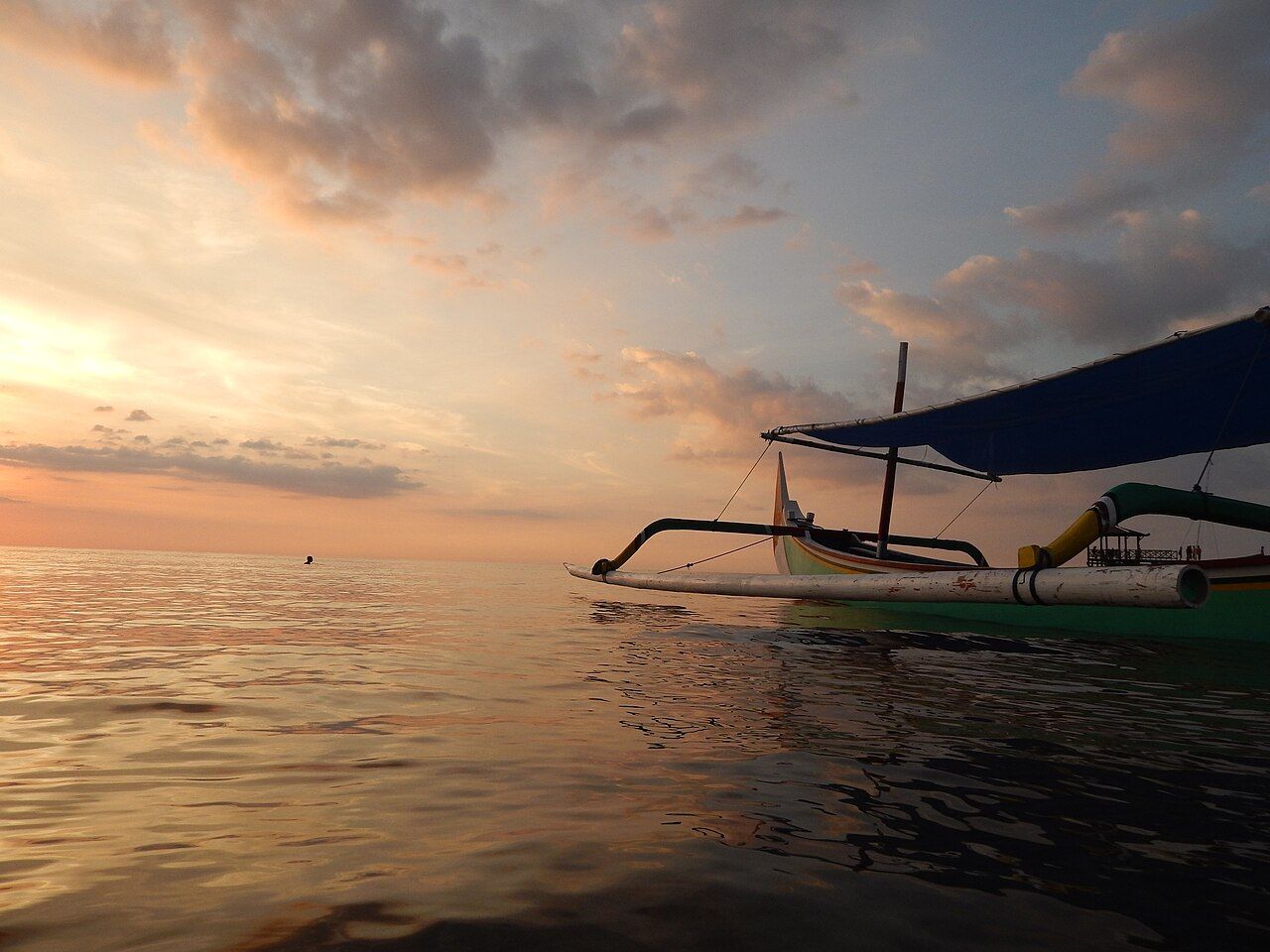
Early mornings are the time to see boats coming in and catches being sold on the beach. Be mindful that this is people's work: keep out of the way of crews hauling boats up the sand, and ask before photographing anyone at close range.
On the same journeyKawah Ijen, the turquoise craterPasir Putih
Pasir Putih, meaning white sand, is the best-known beach on this coast, about halfway between Situbondo town and Probolinggo. The sand is paler than on most of the volcanic beaches of eastern Java, though not brilliant white, and the water is shallow and usually calm, which makes it popular with families. A long wooden jetty with small pavilions runs out over the water, and the beach is lined with outrigger boats.
Local boatmen offer trips out over the reef and small coral areas offshore, some with glass panels in the hull for seeing the bottom. Agree on the price and the length of the trip before you board, and check that life jackets are on board. Snorkelling is possible when the water is clear, but visibility varies with the season and the weather.
The shallow water drops away slowly, so small children can paddle near the shore, but coral, sea urchins and sharp shells lie on parts of the bottom. Reef shoes or old sandals protect your feet, and it is better not to stand on coral at all, since it is easily broken and slow to grow back. Take any rubbish away with you; the beach is cleaned, but plastic washes up after storms.
The beach is busy with domestic visitors on weekends and holidays and much quieter on weekday mornings. As at any public beach, watch for boat traffic in the water, and look after your belongings.
Sunset over the strait
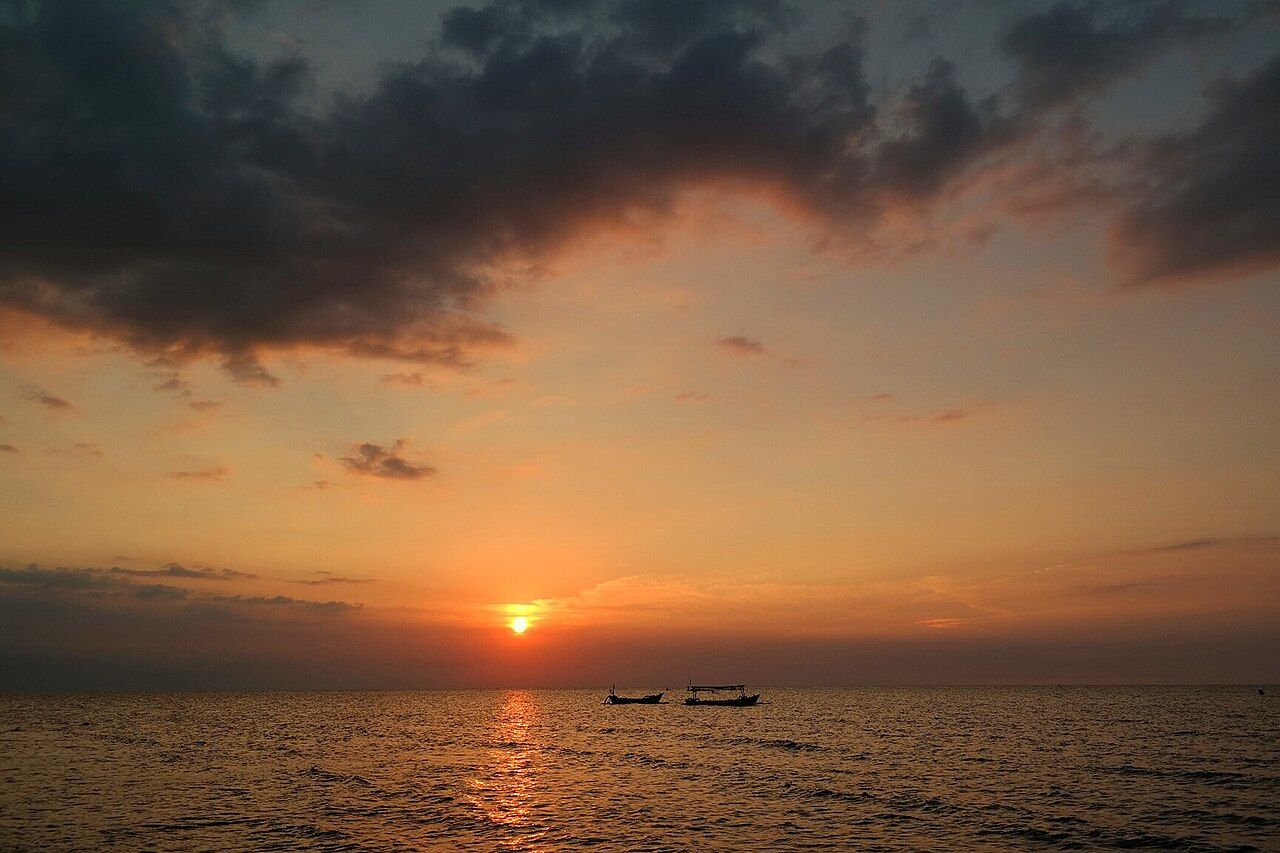
Because the coast curves, the sun sets over the sea for much of the year at Pasir Putih, and evenings bring the beach's best light, with silhouetted boats on still water and the hills of the coast fading behind. The late afternoon is also cooler and pleasanter than the middle of the day, when the north coast can be very hot.
Food along the coast
Fish auctions and small markets in the coastal towns are lively in the early morning, with the catch laid out in baskets on the ground and traders bargaining over it. Dried and salted fish, spread on racks in the sun, is a common sight along the road.
Grilled and fried fish, squid and prawns are the obvious choices near the sea, usually served with rice, sambal and raw vegetables. Madurese-style sate, with chicken or goat and a peanut or sweet soy sauce, is sold on the roadside in the evenings. Our guide to what East Java eats covers the wider picture. As anywhere, choose places where food is cooked to order and drink bottled water.
Calm seas off Pasir Putih
- The dry months, roughly May to October, bring the calmest seas; rain and wind are more frequent from November to March.
- Buses along the coast road stop at Situbondo and near Pasir Putih; for the villages, a car or motorbike gives more freedom. See the ferry to Bali if you are continuing east.
- Heat, glare and sunburn are the main hazards: bring a hat and plenty of water.
- From Situbondo, a road climbs inland through Bondowoso toward the western side of the Ijen plateau, an alternative route to the crater.
Photographers on the rim
- Yoyok Yulianto, CC BY-SA 4.0
- Yoyok Yulianto, CC BY-SA 4.0
- Benni Indo, CC BY-SA 4.0