
Two volcanoes, one journey
Bromo and Ijen sit at opposite ends of a long day's drive across East Java, and many travellers see both in one loop. The usual order runs west to east: Bromo first, reached from Surabaya or Malang, then the drive to the Ijen plateau or to Banyuwangi, then a night start for the turquoise crater at Kawah Ijen, and finally the ferry to Bali. Going the other way works just as well if you are coming from Bali.
The catch is sleep. Both places are at their best before sunrise, and doing them on consecutive nights means two starts in the small hours with a long drive between. If your schedule allows, put a rest day or an easy night between the two. The road east from Probolinggo follows the north coast past Situbondo and Pasir Putih, which makes a pleasant pause on the way, and an inland route through Bondowoso climbs to the plateau from the west.
The Tengger caldera
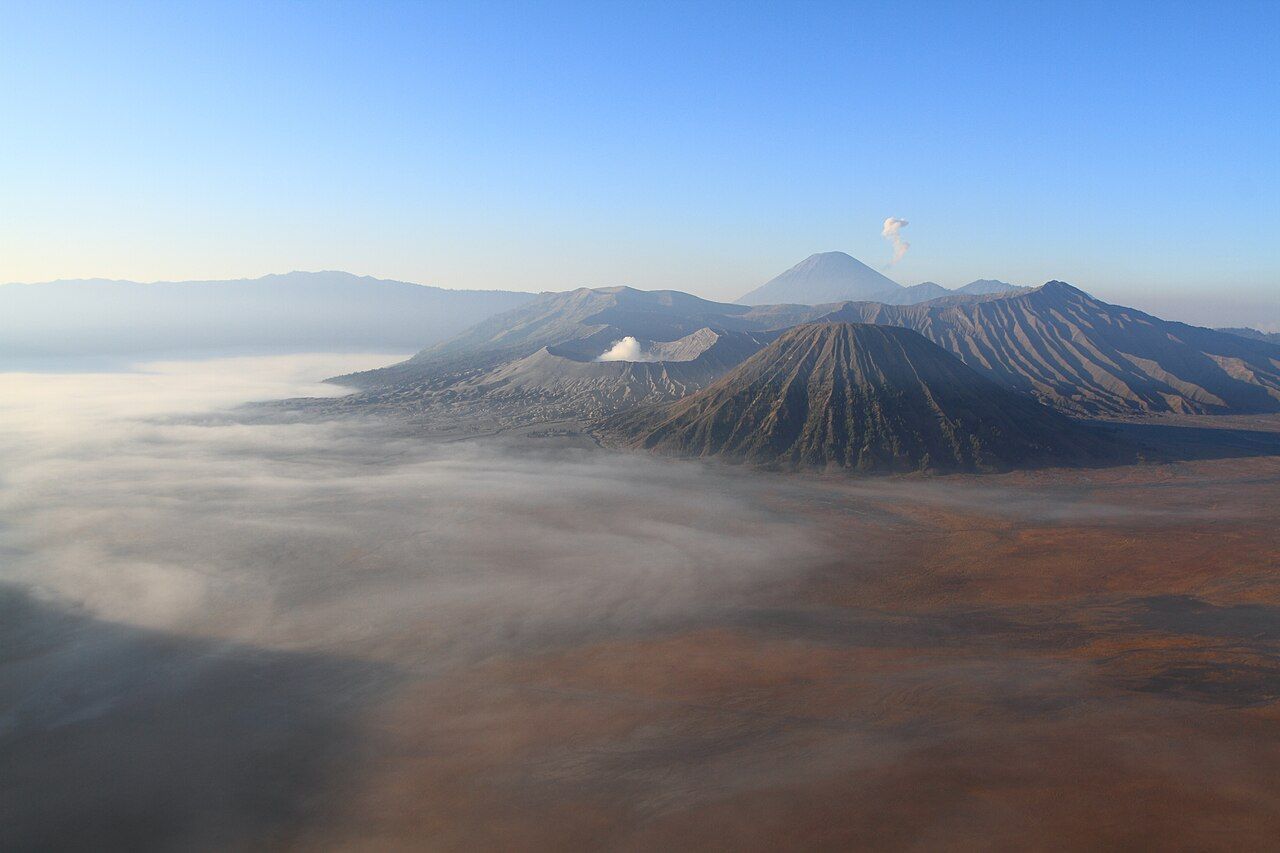
Bromo is part of Bromo Tengger Semeru National Park. What you see from the rim is an enormous old caldera, around ten kilometres across, its floor a flat expanse of fine volcanic sand known locally as the sea of sand. Rising out of it are several younger cones. Bromo itself is the low, steaming one with its top blown open; next to it stands Batok, a symmetrical cone ribbed with gullies and no longer active. Far behind, on a clear morning, Semeru, the highest mountain in Java, sends up puffs of ash at intervals.
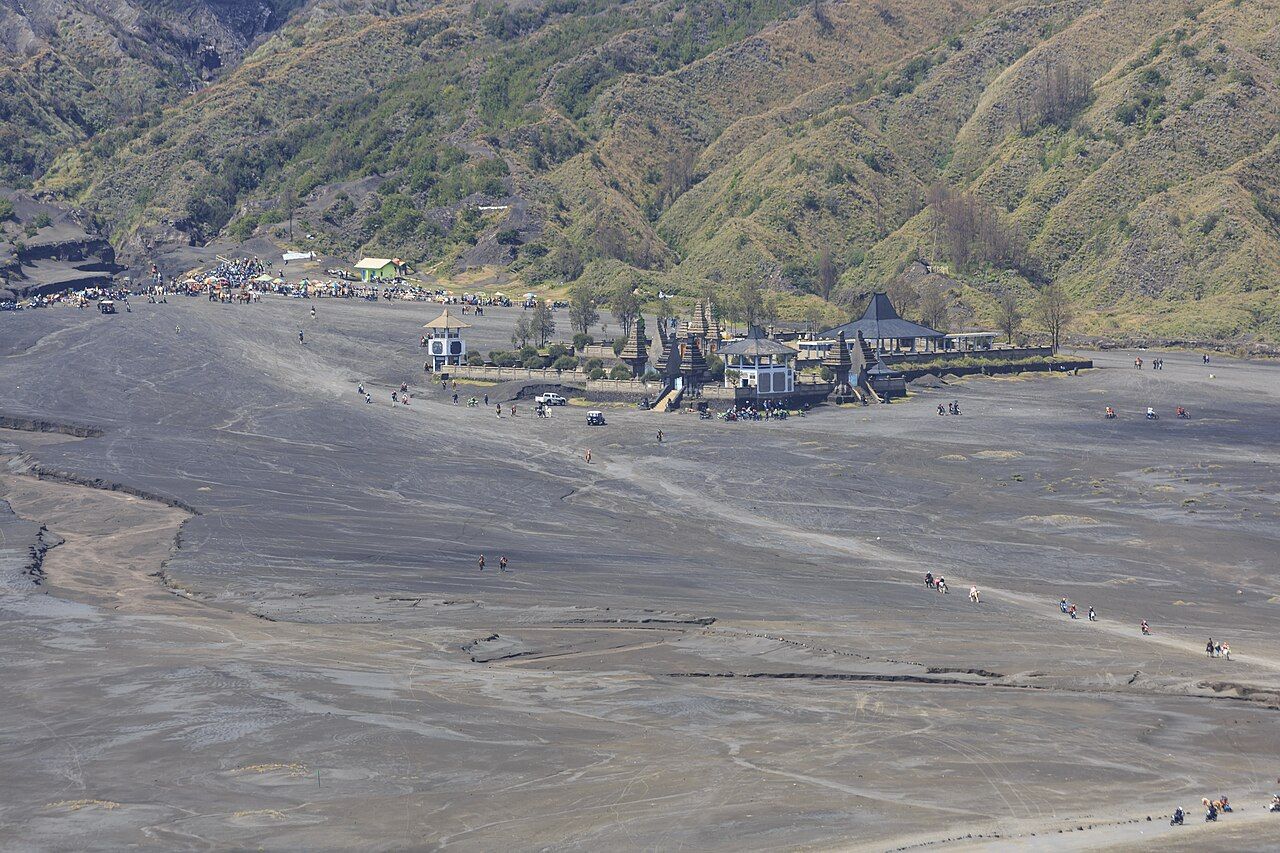
On the caldera floor stands Pura Luhur Poten, a Hindu temple of dark stone walls and tiered shrines, built for the Tengger communities who live around the rim. From the temple a track crosses the sand to the foot of Bromo, where a long flight of concrete steps climbs to the crater edge. Looking down, you see a deep, grey funnel with steam pouring from a vent at the bottom, and you smell sulphur on the wind.
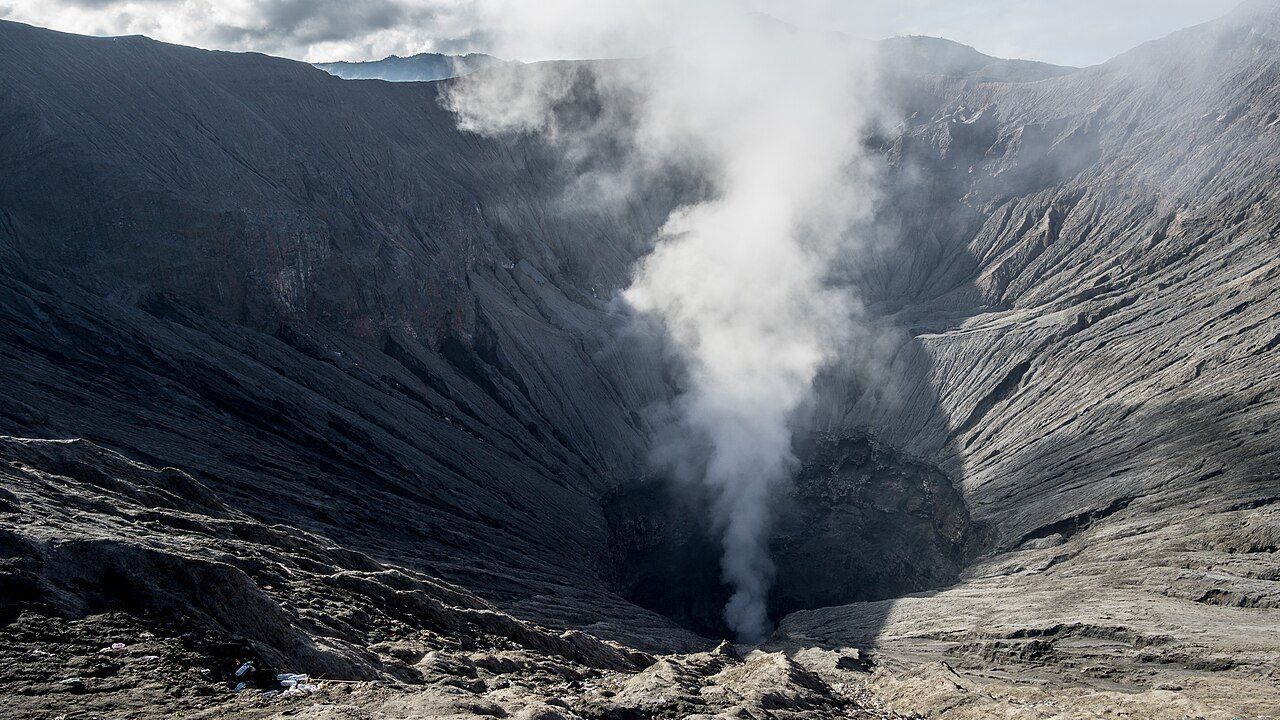
The rim is narrow in places and not always fenced. Stay well back from the edge, especially when the wind is gusting or the steps are crowded, and turn back if ash or gas makes breathing uncomfortable.
Sunrise from the rim
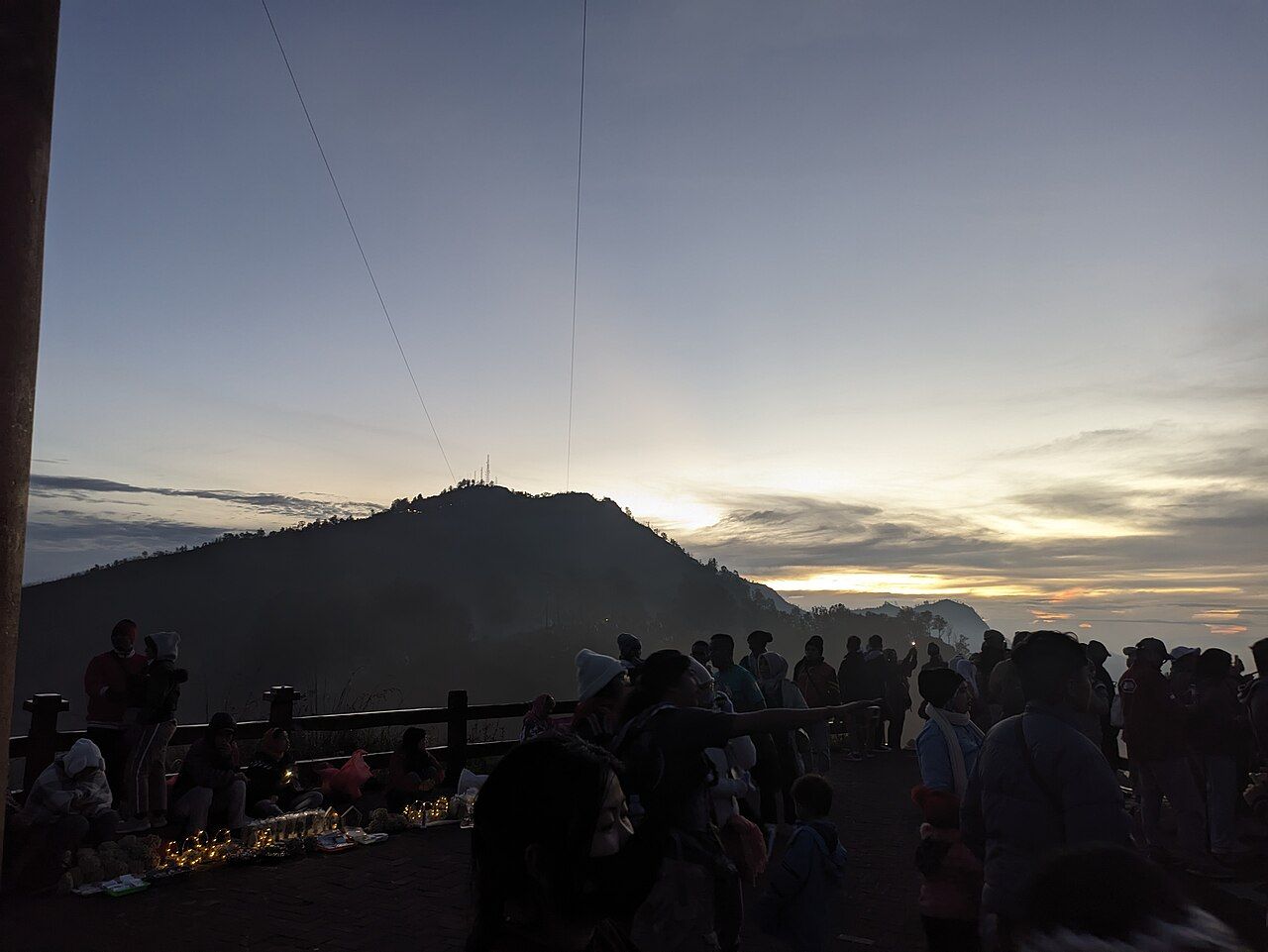
The classic view is from the high ground around Penanjakan on the caldera's northwest side, where several viewpoints look down across the sand to Bromo, Batok and Semeru. Jeeps carry most visitors up in the dark from the villages on the rim, and on busy mornings the viewpoints fill with hundreds of people well before first light. Lower viewpoints such as Bukit Cinta give a similar line of sight with a little less climbing.
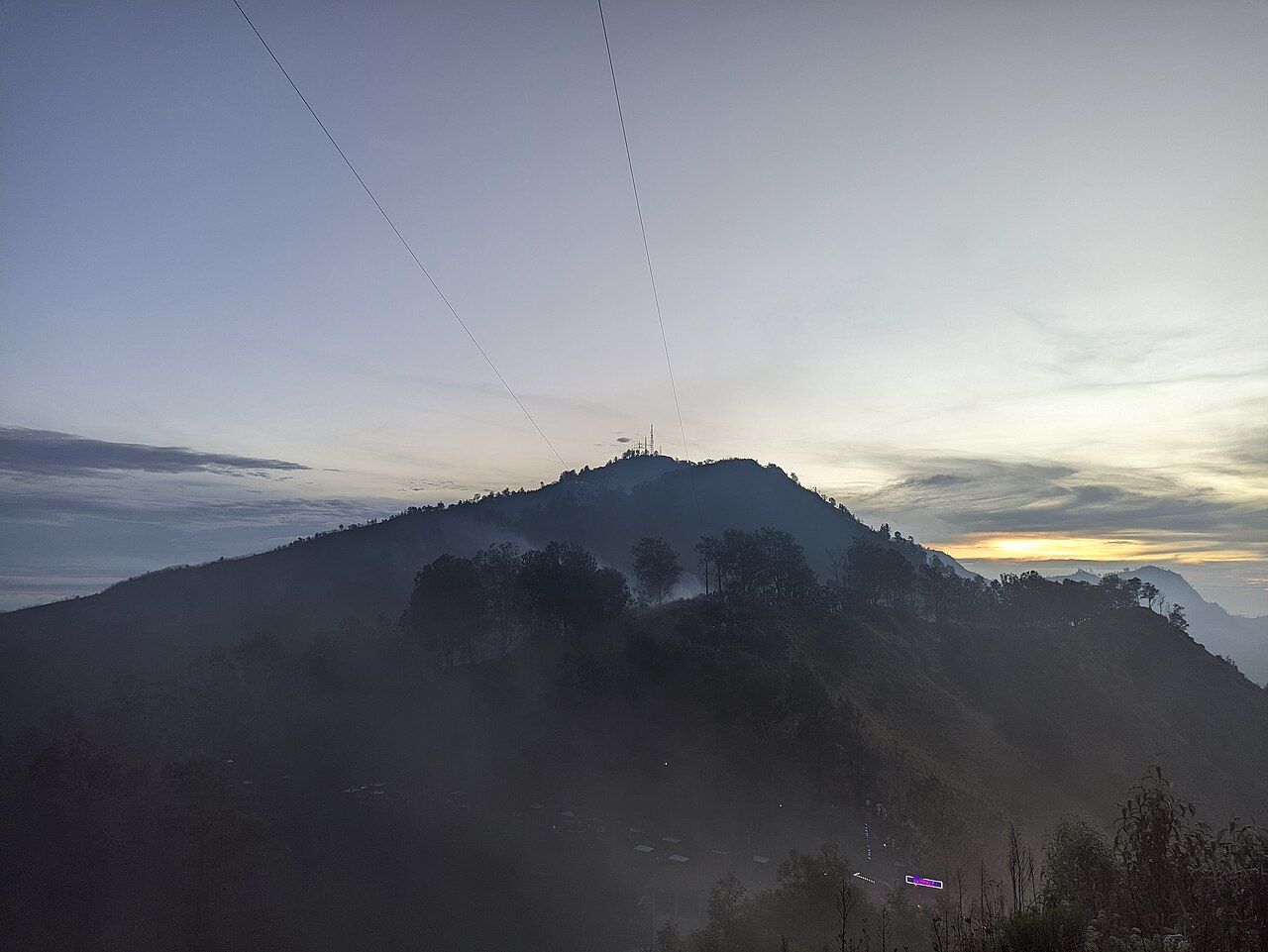
Get there early, dress for frost and let the light do the work.
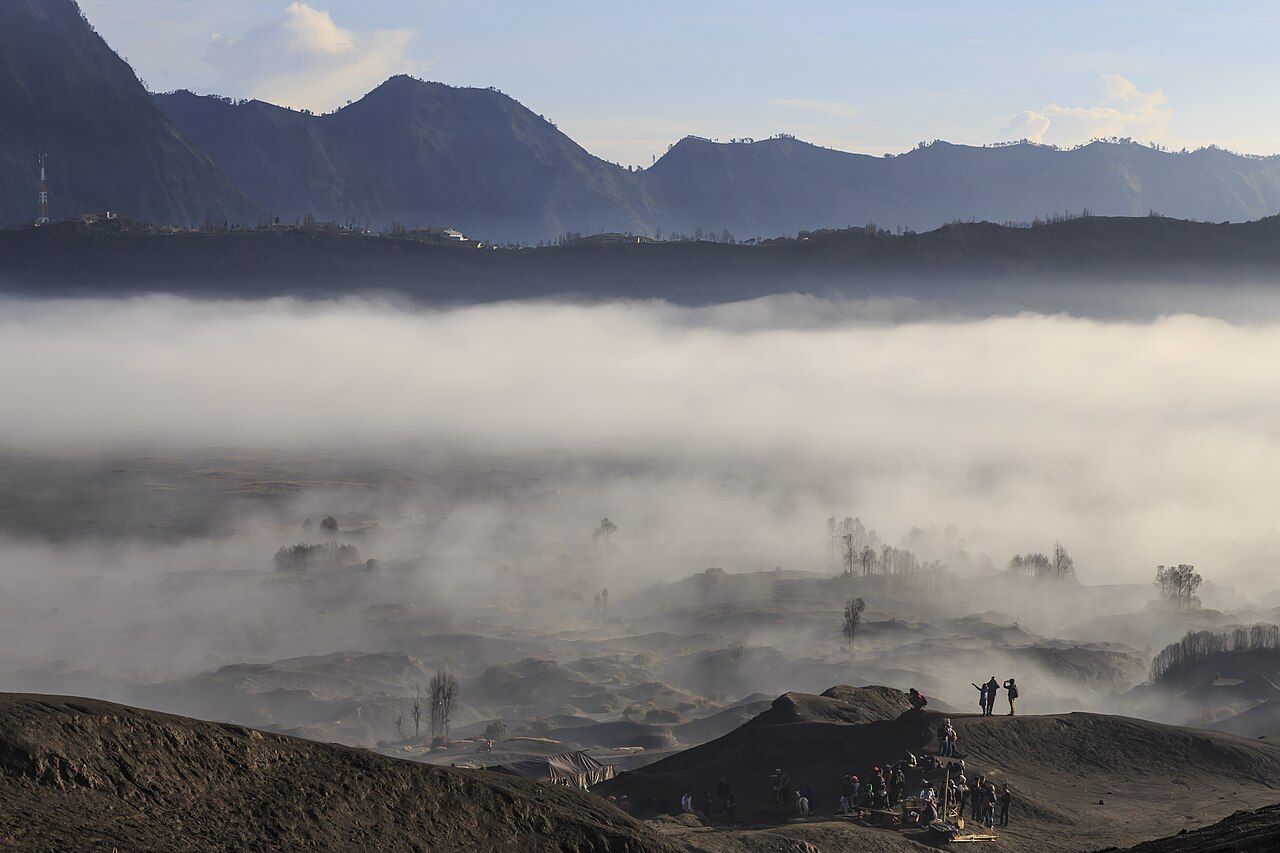
Sunrise itself is often less dramatic than what follows. As the sun clears the horizon, fog that has pooled on the caldera floor overnight starts to lift and thin, and for half an hour or so the cones stand above a moving white sea. Get there early, dress for frost and let the light do the work. On cloudy mornings you may see nothing at all, which is one more reason to leave a spare day.
The Tengger people and Kasada
The villages around the caldera belong to the Tengger, a mountain people with their own Hindu tradition, distinct from that of Bali, and their own dialect of Javanese. They farm the steep slopes below the rim in narrow fields of potatoes, cabbages and onions, and many families also work in the visitor trade as horse handlers, drivers and sellers of warm hats and scarves. This is their home and their sacred landscape, not a stage set.
The most important ceremony of the year is Yadnya Kasada, held in the Tengger month of Kasada, so its date in the ordinary calendar moves from year to year. Offerings of crops, flowers and livestock are carried up to Bromo's crater and given to the mountain, honouring a founding legend of the Tengger ancestors Roro Anteng and Joko Seger. The ceremony draws large crowds of onlookers. If you go, remember that it is a religious occasion: dress modestly, keep off paths that participants need, keep your camera down during prayers and follow the instructions of the organisers.
Horses, jeeps and walking
Getting around the caldera is a local business, and that is part of how the villages make a living. Four-wheel-drive jeeps run the sunrise circuit and cross the sand; men with small, sure-footed horses wait near the temple to carry visitors to the foot of the steps. Both are services run by local people, so agree the price and the route clearly before you set off, and do not pressure a handler to push a tired horse.
Walking is entirely possible. From the rim village of Cemoro Lawang a path drops to the sand, and the crossing to Bromo takes around an hour on foot depending on your pace. Tie a scarf over your nose and mouth, because jeeps and wind raise a lot of fine dust in the dry season. Mornings are cold, often just above freezing in the dry months, and the sun is fierce by mid-morning, so dress in layers.
Alerts, tickets and closures
Bromo is an active volcano. Indonesia uses a four-step alert scale for its volcanoes, and when Bromo's level rises, the area around the crater is closed and the steps to the rim may be off limits. The level can change at short notice, and closures are enforced on the spot. Semeru has its own alert level and its own exclusion zones.
Entry to the park is ticketed, with different rates for Indonesian and foreign visitors and higher prices on some days; how tickets are sold has also changed in recent years. Parts of the park may close for ceremonies or for maintenance. Our notes on the dry and wet seasons cover the months when fog and rain are most likely.
Arriving by public transport is possible too: trains across East Java stop at Probolinggo, from where minibuses and private cars climb to Cemoro Lawang. Whichever way you come, give Bromo at least one night on the rim. The caldera at dusk, empty and silent after the day's visitors have gone, is as memorable as any sunrise.
Photographers on the rim
- skyseeker, CC BY 2.0
- CEphoto, Uwe Aranas, CC BY-SA 3.0
- CEphoto, Uwe Aranas, CC BY-SA 3.0
- Aditya Prabaswara, CC BY 2.0
- Dare2Leap, CC BY-SA 4.0
- Dare2Leap, CC BY-SA 4.0